Why Animal Interaction Can Be Meaningful for Children with SEN
For many children, spending time with animals brings excitement, comfort and happiness. Whether it’s stroking a friendly dog, watching a puppy explore or simply sitting quietly beside an animal, these small interactions can create meaningful moments.
For children with Special Educational Needs (SEN), positive experiences with animals may offer opportunities to develop confidence, practise communication and enjoy calming activities in a different environment.
At The Horizon Centre in Berkhamsted, we believe that every child deserves opportunities to explore new experiences, feel included and enjoy activities that celebrate their individuality.
But what makes animal interaction particularly meaningful for children with additional needs?
1. Creating Moments of Calm and Comfort
Some children with SEN experience sensory sensitivities, anxiety or difficulties adjusting to unfamiliar environments.
Spending time with a calm, friendly animal may offer a comforting experience, particularly when children can interact at their own pace.
For some children, gently stroking an animal or watching its movements can provide an enjoyable opportunity to relax and focus on the present moment.
However, every child’s sensory preferences are different. While one child might find a puppy’s soft fur comforting, another may feel overwhelmed by barking, unpredictable movement or physical contact.
The key is providing choice, reassurance and a supportive environment where children feel comfortable.
2. Encouraging Communication and Social Interaction
Communication looks different for every child. Some children express themselves through speech, while others communicate using gestures, facial expressions, assistive technology or body language.
Animals can create opportunities for children to communicate naturally, without the same expectations they may experience in other social situations.
For example, a child might:
Point towards a puppy to show interest.
Use words or gestures to express excitement.
Practise asking for a turn to interact.
Share an enjoyable moment with a parent or carer.
Communicate when they need a break.
These interactions may help children practise communication skills in an enjoyable setting.
Importantly, the experience should never place pressure on a child to speak, touch an animal or participate in ways that feel uncomfortable.
3. Make Time for Something That Makes You Smile
Trying something new can sometimes feel challenging for children with additional needs, particularly when an activity involves unfamiliar people, sounds or surroundings.
Positive animal interactions can provide opportunities to explore new experiences gradually.
A child who initially prefers to watch a puppy from a distance may eventually feel comfortable moving closer or offering a gentle stroke.
For another child, simply remaining in the room and observing may be an achievement worth celebrating.
Confidence develops differently for every child, and even the smallest steps can be meaningful.
Allowing children to make choices about how they participate helps create a sense of independence and control.
4. Try Something Different with Friends
Animals can bring joy, companionship and opportunities for positive emotional experiences.
For some children with SEN, spending time with animals may encourage relaxation, curiosity and enjoyment.
Animal-assisted activities have attracted growing interest for their potential role in supporting wellbeing, although research findings vary and benefits cannot be guaranteed for every child.
What matters most is creating a positive experience that respects the child’s individual needs.
Whether a child enjoys watching puppies play, gently interacting with an animal or sharing the experience with family, these moments can contribute to an enjoyable and memorable activity.
5. Encouraging Gentle Movement and Sensory Exploration
Children experience the world through their senses, and animal interactions can introduce a variety of sensory experiences.
These might include:
Feeling the texture of an animal’s fur.
Watching puppies move and explore.
Listening to gentle sounds.
Practising slow, controlled movements.
Exploring a new environment with support.
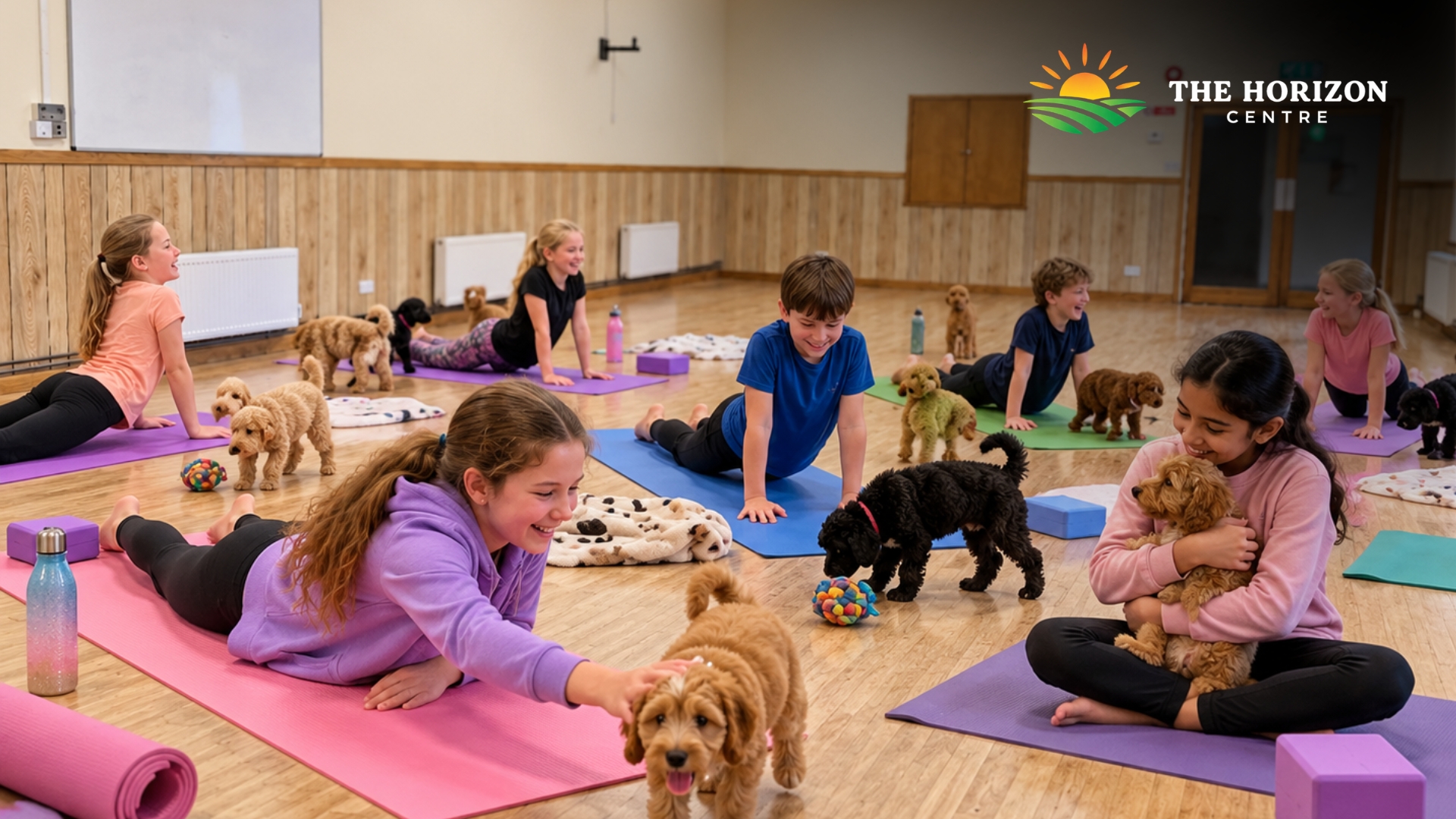
Activities such as puppy yoga can also introduce gentle stretching and movement alongside opportunities to observe or interact with puppies.
However, sensory experiences should always be adapted to the individual. Children should be able to take breaks, avoid unwanted physical contact and choose whether to participate.
The puppies’ wellbeing is equally important, with appropriate supervision, rest periods and opportunities for the animals to move away from interactions.
Discover Puppy Yoga at The Horizon Centre
If you’re curious about combining gentle movement with the joy of spending time around puppies, we’re excited to be bringing Puppy Yoga to The Horizon Centre in Berkhamsted.
Our upcoming session on Thursday 12th November 2026, from 6:30pm to 7:30pm, offers an opportunity to enjoy guided yoga alongside adorable Doxiepoo puppies.
Although animal interaction can be meaningful for some children with SEN, puppy yoga is not a clinical therapy, and not every session will be suitable for every child.
Parents and carers of children with additional needs are encouraged to contact us before booking to discuss age requirements, supervision, sensory considerations and any available adjustments.